Climate Week NYC: Moving from Climate Ambition to Practical Action
By Beatriz Daim, Global Sustainability Specialist, & Dara Colacchio, US Marketing Manager | October 2026
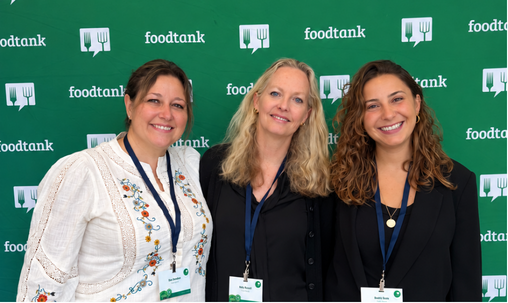
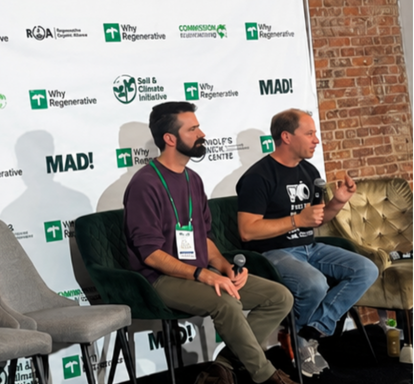
During Climate Week NYC 2026, Tradin Organic was represented by Hobbs Wolcott, President, US; Beatriz Daim, Global Sustainability Specialist; and Dara Colacchio, US Marketing Manager. Together with industry leaders, customers, and partners, they explored ways to accelerate the transition to more resilient and regenerative food systems. Between navigating the NYC subway (with varying degrees of success!), speaking at industry events, and connecting with leaders across the food and agriculture sector, we came away with fresh perspectives on the opportunities and challenges shaping the future of organic agriculture.
According to Climate Group's 2026 report, Climate Week NYC brought together more than 120,000 participants across 1,500+ events, creating opportunities for collaboration among leaders in climate, business, agriculture, and policy. For Tradin Organic, it was an opportunity to share our perspective, learn from peers and partners, and strengthen relationships across the organic regenerative community.
Tradin Organic sponsored events hosted by Why Regenerative and the Organic Trade Association & Food Tank, participated in discussions across Climate Week, and contributed ingredients to support gatherings hosted by UNFI and Regen House.
Across these different conversations, several themes stood out.
Climate impact is about more than carbon
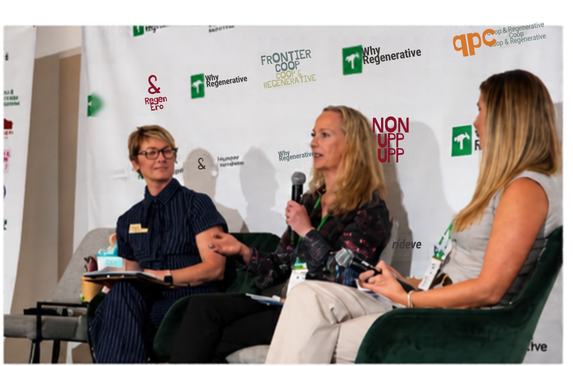
One of the clearest messages from the “The Roots of Organic: Making Organic Count” panel was that carbon emissions alone do not tell the full story. Beatriz Daim, Tradin Organic’s Global Sustainability Specialist, emphasized the importance of looking at farms as interconnected ecosystems, where soil health, biodiversity, water quality, and farmer livelihoods all contribute to environmental and social impact. To fully demonstrate the benefits of organic agriculture, climate reporting needs to capture these broader outcomes rather than focusing solely on carbon emissions.
Current databases and carbon accounting methods often rely on conventional farming data and place a strong emphasis on yield for emission intensity. This can overlook some of the wider benefits associated with organic regenerative agriculture, particularly around soil health, biodiversity, and long-term resilience.
Besides the challenge of measurement, communicating impacts in a way that customers and consumers can understand is equally important. Regulations such as the EU’s CSRD can help create a common framework for sustainability reporting, which is increasingly important amid greenwashing concerns and a crowded certification landscape. At Tradin, our ESG reporting has also helped make climate work a broader business responsibility, involving teams across the company rather than remaining a voluntary sustainability initiative.
However, sustainability data is only useful when it supports better decisions and helps us understand the connection between agricultural practices and the wider farm ecosystem. For Tradin, this includes connecting our carbon insetting framework with broader supply-chain development work. For example, in organic coconut sugar production, we are exploring cleaner and more efficient cooking systems that could reduce emissions while improving working conditions for farmers.
Emerging research into nutrient density is opening new conversations about how agricultural practices may influence food quality and nutritional value. During Why Regenerative's State of Regenerative Agriculture (SORA) event, the Regenerative Organic Alliance highlighted its ongoing research with Edacious, including the recently published 2026 Regenerative Organic Nutrition Report. The research explores the nutritional characteristics of ROC products and the potential for credible scientific measurement to help us better understand the connections between farming practices and ingredient nutrition.
Climate action is therefore not only about reducing emissions, but about strengthening the resilience of the people, communities, and ecosystems that our food systems depend on.
Creating market demand for regenerative organic ingredients
Many of the sessions focused on the practices farmers are adopting, from improving soil health and restoring biodiversity to diversifying crops and protecting water resources. But an equally important question was: How do we create the markets that allow these practices to scale?
Farmers need more than technical advice. They also need reliable buyers, processing infrastructure, financing, and long-term purchasing commitments. The economic model must work for everyone involved.
This was a recurring theme at Why Regenerative's State of Regenerative Agriculture (SORA) event, where speakers emphasized that regenerative agriculture must be economically viable to succeed. Farmers need resources and commitments that reduce the risks of transitioning to new practices. Ingredient suppliers like Tradin Organic can play an important role by connecting responsible agricultural production with growing demand from food and beverage manufacturers.
Simple Mills’ work to develop regenerative programs around its highest-impact ingredients was one example of how brands can help create demand for underutilized crops. Other discussions highlighted the importance of agroforestry, diversified farmer incomes, and alternative supply chains to strengthen crop resilience, such as in cocoa.
For food and beverage manufacturers, this creates an opportunity to support regenerative agriculture through ingredient sourcing. By choosing ROC ingredients, brands can help strengthen market demand for regenerative organic production while advancing their own sustainability and product development goals.
This is closely connected to Tradin’s role and our work in origin. By connecting farmers and producers with global markets, we help create opportunities for organic regenerative agriculture to scale. Did you know our project in Sierra Leone was the first large-scale cocoa project to be ROC-certified? To date, it still has the largest number of ROC producers. Since then, we have been expanding our ROC portfolio and working together with our partners and customers to create reliable markets and conditions for regenerative organic practices. Read more about our full ROC portfolio here: Tradin Organic ROC Portfolio
Looking ahead
Climate Week NYC reinforced that climate action is not a separate issue from business strategy. It is closely connected to supply security, customer expectations, farmer livelihoods, product innovation, and long-term growth.
At Tradin Organic, we believe resilient food systems are built through collaboration, credible action, and strong relationships across the supply chain. Our participation in Climate Week gave us the chance to share our work, learn from others, and identify new opportunities to contribute.
But it doesn’t stop there. We're continuing to engage with customers, partners, and industry organizations to explore new opportunities for collaboration, strengthen regenerative supply chains, and turn shared ambitions into practical solutions.
Much work remains, but Climate Week reinforced both the urgency of action and the opportunities ahead. Together, we can help build a more resilient, nature-positive food system.
But the conversations didn't end there. We're continuing to engage with customers, partners, and industry organizations to explore new opportunities for collaboration, strengthen regenerative supply chains, and turn shared ambitions into practical solutions.
Much work remains, but Climate Week reinforced both the urgency of taking action and the opportunities ahead. Together, we can help build a more resilient, nature-positive food system.